Let’s get our children talking

In schools, language underpins progress, impacts on attainment throughout primary and secondary years, affects self-esteem and behaviour and plays a huge role in a child’s future life chances. Children don’t learn to talk by accident – they need adults to nurture and support their language and communication. The more adults know and understand about language and how it develops, the easier it is for them to help children improve their talking, understanding and listening skills.(The Communication Trust 2018)

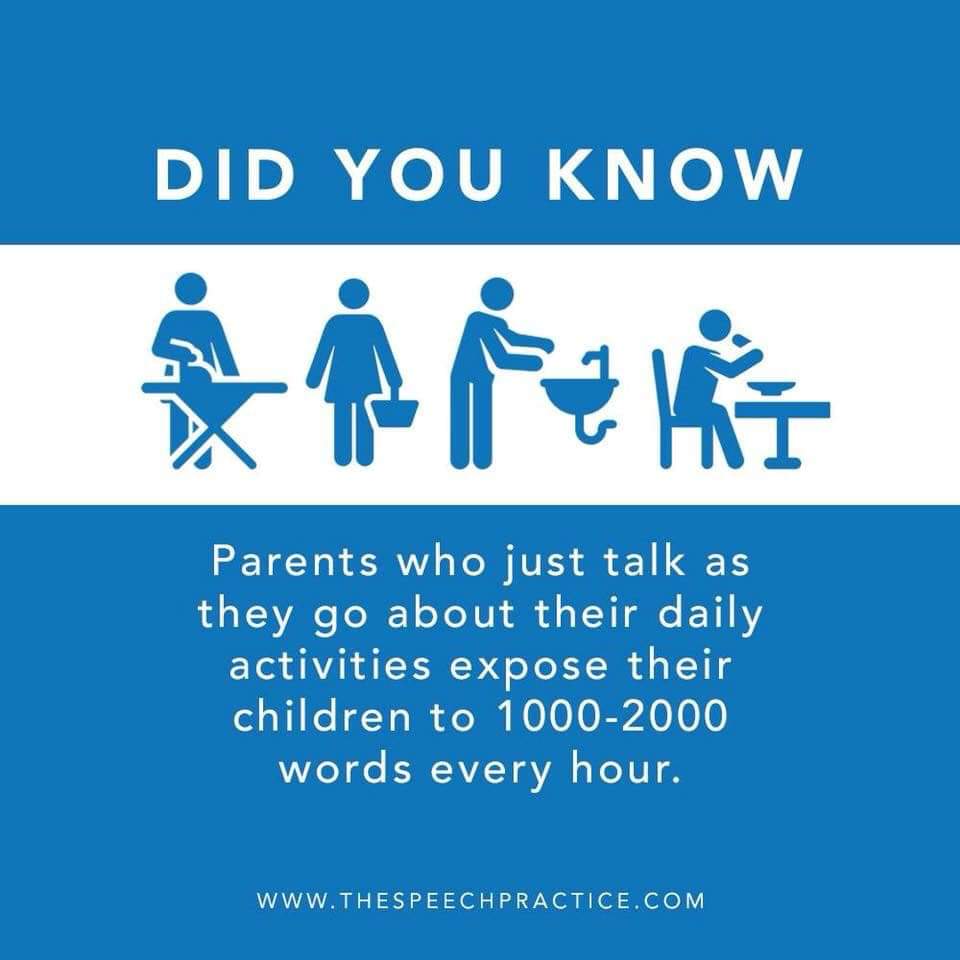
It may seem an obvious thing to say, but one of the best things we can do with young children is to have interesting and enjoyable conversations with them. What this means is that as we go about our activities, whether at home or out and about, we should make a special effort to answer children’s questions, point out things that interest us, involve children in helping and planning what to do next – whether that’s putting out things to play, tidying up, where to visit or whatever. When reading a book with children, make a special effort to read slowly, with lots of fun and expression. Don’t worry about stopping if the children ask you questions. Encourage them to join in with the sounds and rhythms of the story. We should also think carefully about how we speak to children – do we spend too much of the day issuing commands: ‘do this’, ‘do that’? – (Michael Rosen – Children’s Laureate).

“A child who is not at the expected standard in language at the age of five is 11 times less likely to achieve the expected level in maths at age 11.”

– (Source: Department for Education, 2017)

“Children with language difficulties at age five were four times more likely to have reading difficulties in adulthood, three times as likely to have mental health problems, and twice as likely to be unemployed when they reached adulthood.”

(Source: Early Intervention Foundation, 2017)

Over half the teachers asked in a recent survey reported that at least 40% of their pupils lacked the vocabulary needed to access their learning. Worryingly, 69% of primary school teachers and 60% of secondary school teachers believe the gap is increasing.

(OUP – 2018)

Over 70% of children’s lives are spent, not in a setting, but with their family and the wider community. Therefore home and community must be recognised as significant learning environments in the lives of children.

(Effective practice: Parents as Partners – 2007).

1 million children in the UK have speech, language and communication needs SLCN

(I CAN, 2016)

2 children in every class will have clinically significant language difficulties

(Norbury, 2016)

50% of children in some areas start school with delayed language

(I CAN, 2016)

In primary schools, more children have language difficulties than any other special need

(I CAN, 2016)

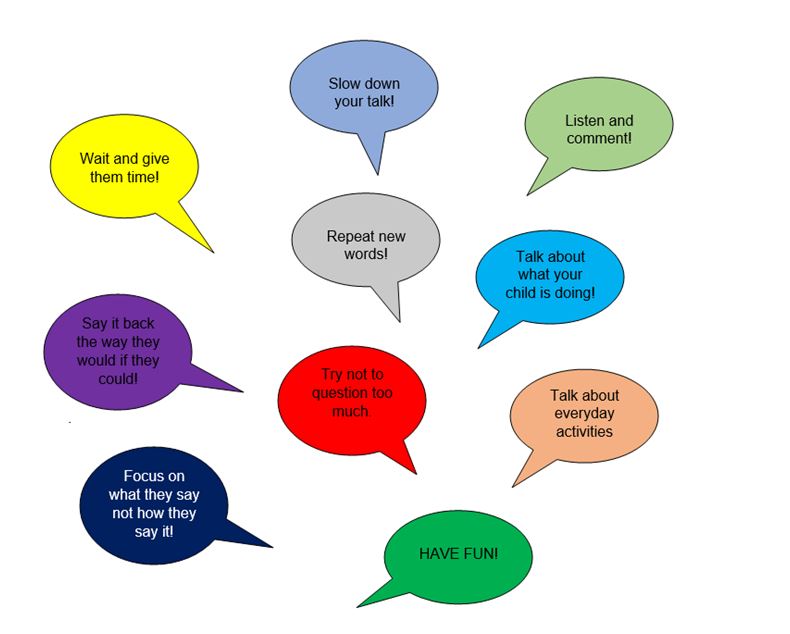
Talking Techniques

  1. Talk to your child about the things they’re interested in – this helps to get them enthusiastic about the conversation and also gives you a good opportunity to find out more about what they enjoy and why.
  2. Show them the right way. If children make mistakes, its best to repeat back what they say rather than tell them it’s wrong. Say it clearly with the right words, so they can hear how things should sound. Children learn from what they see and hear.
  3. Try setting aside some specific talking time, with the TV off, just for talking and playing together.
  4. Vocabulary is key learning and remembering words is incredibly important. Help children of all ages by using all their senses to teach new words. Then build in lots of repetition and practice.
  5. Make learning language fun. Play around with words, make up silly rhymes – children of all ages can enjoy the fun of language. Understanding how words are made up and rhyme helps with learning to read.
  6. Think out loud– talk to your child about what you’re doing and when you’re doing it, that way they will begin to match what they hear to the object or the action that you’re talking about.
  7. Use rhymes and singing – sing your child’s favourite nursery rhyme with them. Try to sing it slowly to help your child listen to the words of the rhyme. If you can use actions too, this will help your child to understand the words better.

Useful Video’s from the NHS

Introduction - The language development pyramid

Tip 1 - Get down to your child's level

Tip 2 - Comment on what you're both looking at

Tip 3 - Model words correctly

Tip 4 - Dummies

Tip 5 - Give choices

Tip 6 - Reduce screen time

Tip 7 - Share books and sing nursery rhymes

Tip 8 - Follow your child's lead in play

Tip 9 - Playing is fun

Tip 10 - Questions and comments

The Full Animation...